
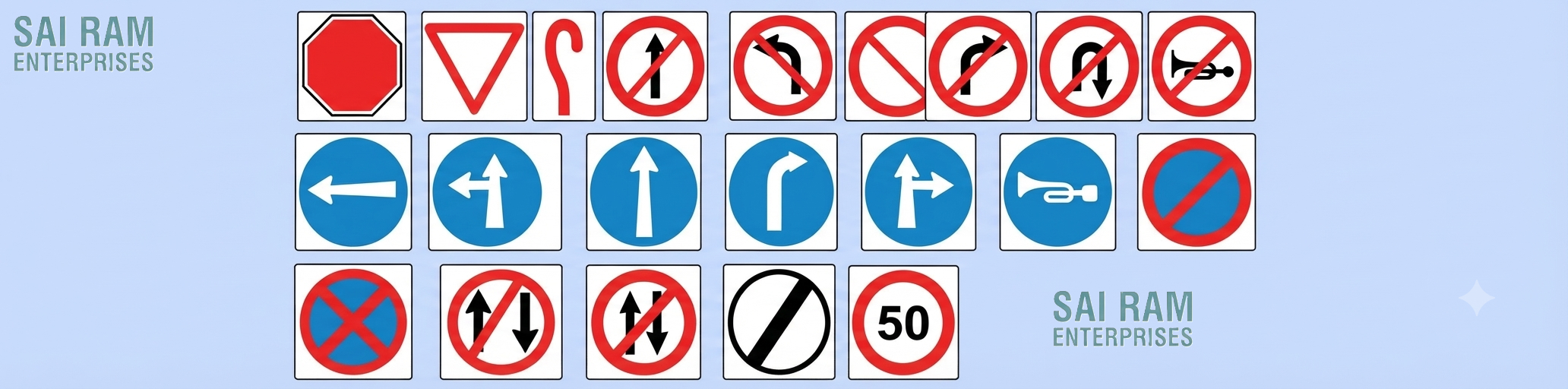
Traffic Sign Shapes and Colours: IRC 67 Standard Guide
The engineering and cognitive principles behind standardized geometric shapes and color chromaticity on Indian roads.
The Psychology of Shapes & Colours in Road Engineering
When traveling at 100 km/h, a driver covers approximately 28 meters every second. Under these conditions, the brain recognizes shape and color long before it can read text or decipher fine symbols.
The Indian Roads Congress (IRC 67) established a rigid geometric and chromatic system so drivers instantly recognize whether a sign is commanding them to do something, warning them of danger, or guiding them to a destination.
Traffic Sign Shapes & Their Significance
Circles convey legal authority and compulsory orders. They dictate limits, restrictions, and mandatory directions.
Triangles with apex pointing up convey hazard warnings and caution ahead.
Provide directional, geographical, and facility information without conveying legal restriction or hazard.
The 8-sided octagon is uniquely reserved for the STOP sign so that drivers immediately identify it even when viewed from behind or during snow/dust storms.
Standardized Color Coding in India
| Color | Primary Meaning & Usage |
|---|---|
| Red | Prohibition, Stop, Danger, and Speed Restriction borders |
| Yellow | Hazard warning backgrounds, construction work zones, rural road signs |
| Green | Guide & destination signs on National and State Highways |
| Blue | Expressway directional signs, facility amenities (hospital, fuel), mandatory direction arrows |
| White | High-contrast background for regulatory signs and lettering on green/blue boards |
Frequently Asked Questions
Related Products & Signage Categories
Need Custom Sign Boards or Road Safety Quotes?
Sai Ram Enterprises supplies IRC 67 compliant traffic sign boards and road safety solutions across India.