
Thermoplastic Paint Road Marking & Materials
Hot-applied retro-reflective thermoplastic compound, drop-on optical glass beads, and concrete primer formulations conforming to MoRTH Section 803.
Available Thermoplastic Road Marking Products
MoRTH Clause 803 compliant hot-melt compounds and glass bead formulations for highway contract execution.
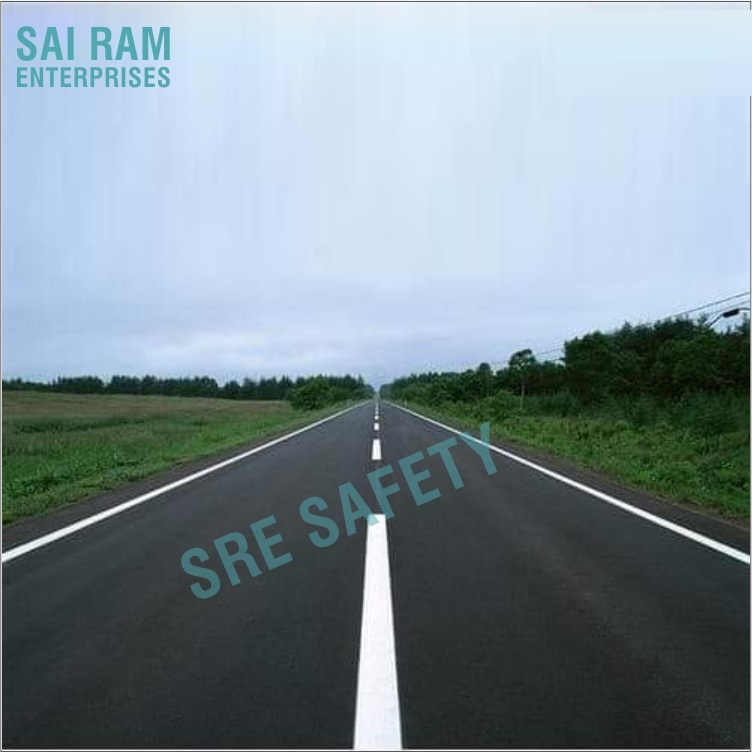
Hot-Applied Thermoplastic Road Marking Compound (MoRTH Clause 803)
Heavy-duty hot-applied thermoplastic road marking compound formulated with synthetic hydrocarbon resin, mineral fillers, and intermix optical glass beads for long-lasting nighttime retro-reflectivity.
Retro-Reflective Drop-On & Intermix Glass Beads
High-index optical glass beads engineered to be mechanically dispersed onto hot thermoplastic screed surfaces to deliver immediate and sustained retro-reflectivity for vehicular headlights.
Thermoplastic Primer & Bonding Tack Coat
High-adhesion synthetic primer compound applied to concrete pavements and aged oxidized asphalt surfaces prior to thermoplastic application to prevent delamination.
Preformed Thermoplastic Arrows, Letters & Symbols
Pre-cut factory-fabricated thermoplastic sheets designed for rapid gas-torch fusion onto roadways, guaranteeing precise IRC 35 symbol geometry and uniform skid resistance.
What is Thermoplastic Road Marking?
Thermoplastic road marking is a heavy-duty pavement marking material composed of synthetic hydrocarbon or alkyd resins, pigment, mineral extenders, and embedded glass beads. Unlike conventional water-based or solvent-based paint that wears off quickly, thermoplastic material is heated to approximately 180°C to 200°C and applied in a molten state onto asphalt or concrete road surfaces.
Upon cooling within minutes, it fuses with the road surface to form a thick, wear-resistant, high-visibility line conforming to Ministry of Road Transport and Highways (MoRTH) Section 803 standards.
How Thermoplastic Road Markings Work
The optical performance of thermoplastic markings depends on retro-reflection. The compound contains both intermix glass beads throughout the material and surface drop-on glass beads applied immediately behind the molten screed applicator.
When vehicle headlights illuminate the road marking at night, the microscopic spherical glass beads refract and reflect the light directly back into the driver’s eyes, illuminating lane lines and pedestrian crossings even in dark, unlit conditions.
Key Benefits of Thermoplastic Road Marking
- Extended Service Life: Typically lasts 3 to 5 times longer than cold solvent paints under heavy commercial traffic.
- Rapid Drying & Traffic Reopening: Hardens within 2 to 5 minutes, minimizing traffic disruption during highway execution.
- Superior Nighttime Retro-Reflectivity: Drop-on glass beads ensure immediate high initial retro-reflectivity.
- High Skid Resistance: Formulated with skid-resistant aggregates to safeguard two-wheeler motorists.
MoRTH Section 803 Specifications Overview
In India, all national highway projects require strict compliance with MoRTH specifications:
| Parameter | MoRTH Standard Requirement |
|---|---|
| Application Thickness | 2.5 mm minimum (excluding surface drop-on glass beads) |
| Intermix Glass Beads | Minimum 20% by total weight |
| Surface Drop-On Beads | Minimum 250 g/m² mechanically applied |
| Softening Point | >= 102.5°C to prevent tire rutting in hot Indian summers |
| Skid Resistance | Minimum 45 BPN |
Frequently Asked Questions
Related Products & Signage Categories
Need Custom Sign Boards or Road Safety Quotes?
Sai Ram Enterprises supplies IRC 67 compliant traffic sign boards and road safety solutions across India.