सुंदरकांड पाठ
Sunderkand is the fifth chapter of the Ramcharitmanas by Goswami Tulsidas. It narrates Hanuman's journey to Lanka, his meeting with Sita, and his return with her message to Rama.
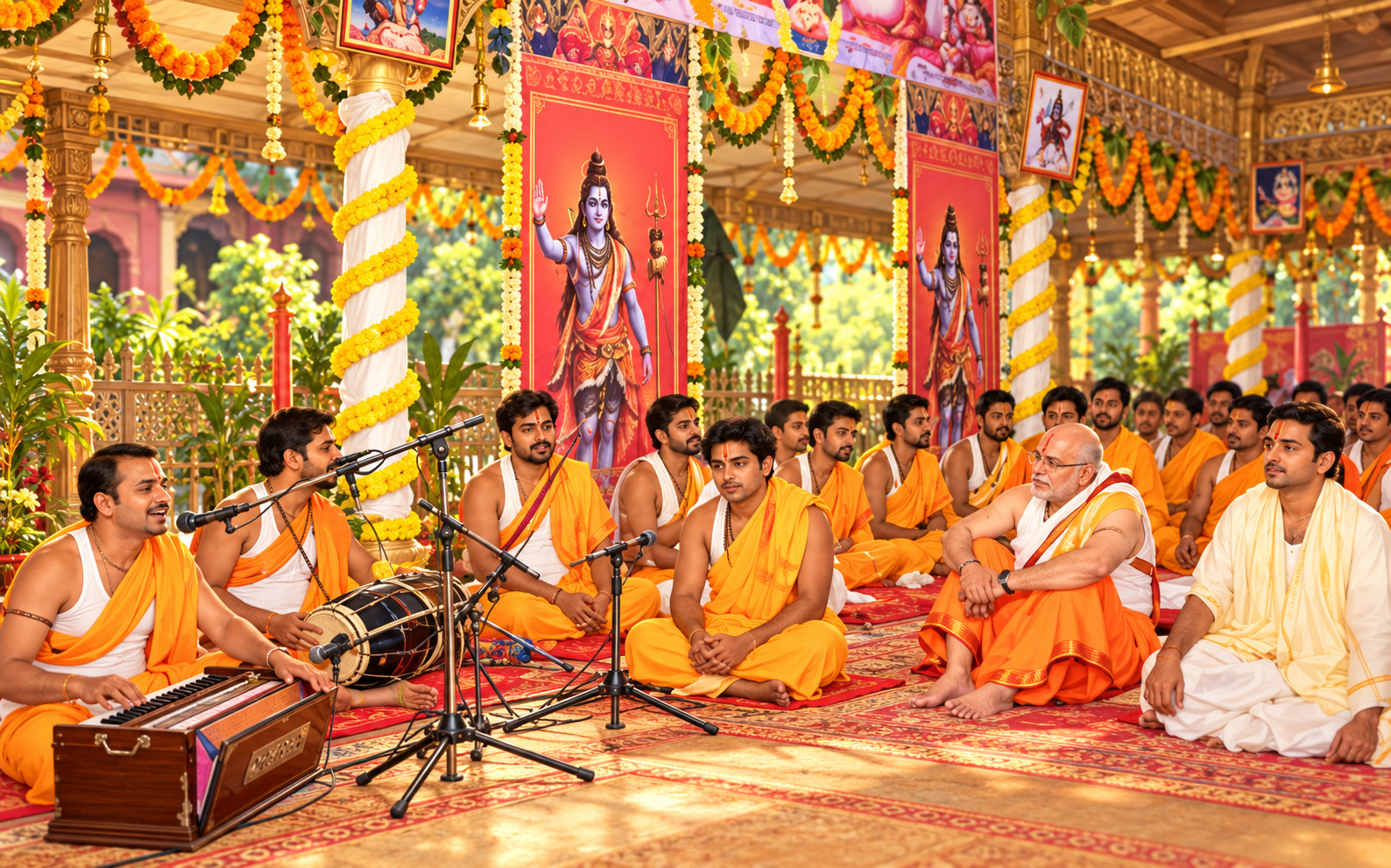
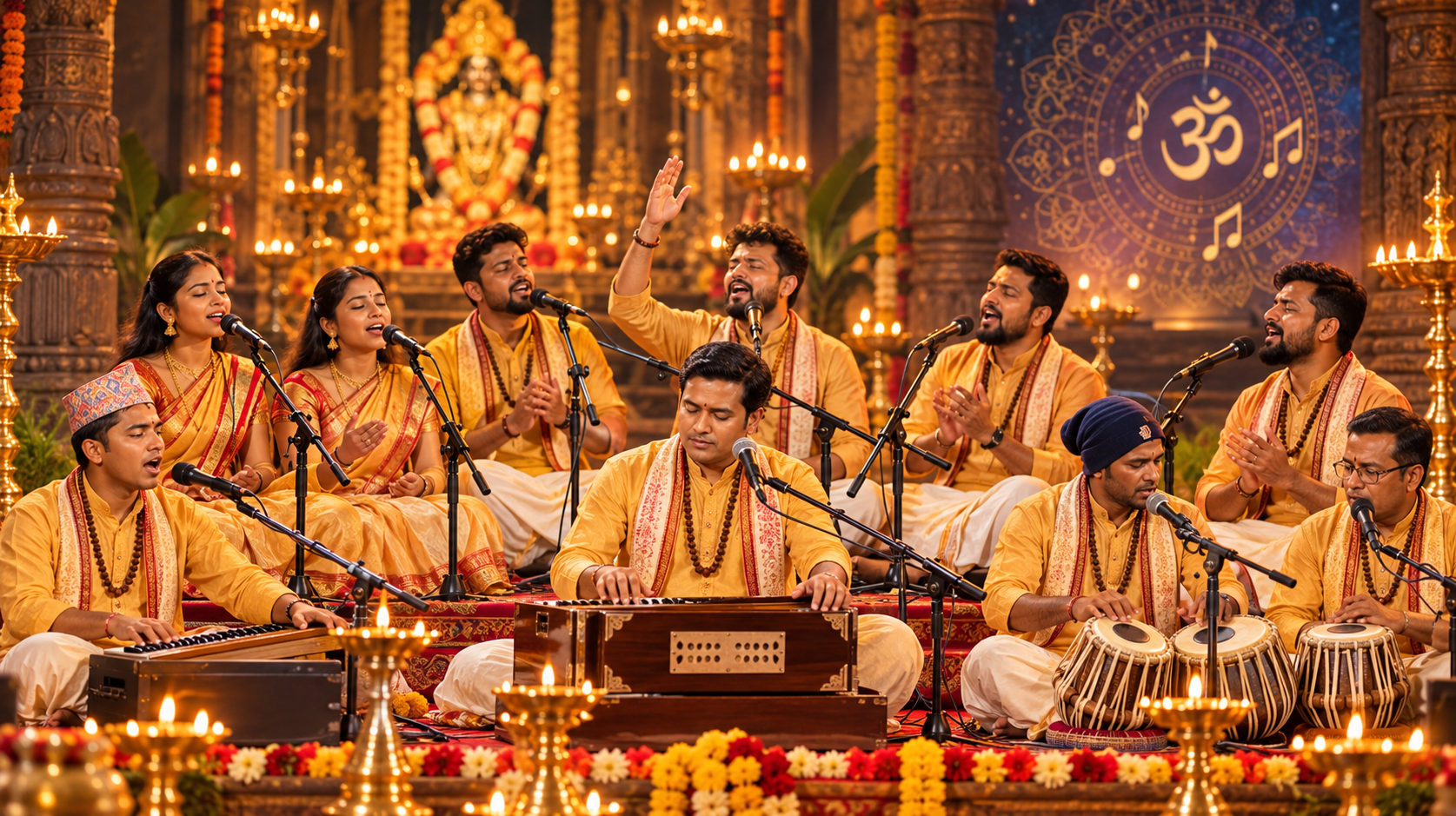
Families often organise a Sunderkand path on Tuesdays and Saturdays, on moving into a new home, before starting a venture, or simply as a devotional gathering. It is commonly performed by a Bhajan Mandali with harmonium, dholak and manjira.
Significance: Sunderkand is associated with courage, devotion and the removal of obstacles, and is closely linked with Hanuman worship.
Typical duration: 2 to 4 hours
Procedure
- Clean the space and set up a small platform with images or idols of Rama Darbar and Hanuman.
- Light a lamp, offer flowers and perform a short sankalp (statement of intent) led by the Pandit.
- Begin with invocation of Ganesha and Hanuman, followed by the path of Sunderkand, sung in chaupai and doha form.
- Include the Hanuman Chalisa and aarti at the end of the recital.
- Distribute prasad to everyone who attended.
Samagri checklist
Your Pandit will confirm the exact list for your family tradition.
- Rama Darbar and Hanuman image
- Ramcharitmanas (Sunderkand)
- Ghee lamp and cotton wicks
- Flowers and garlands
- Incense sticks
- Roli, akshat (rice)
- Fruits and sweets for prasad
- Tulsi leaves
- Camphor for aarti
Frequently asked questions
How long does a Sunderkand path take?
A complete recital with bhajans usually takes two to four hours, depending on the pace and the number of singers.
Do we need a Pandit and a Bhajan Mandali both?
A Pandit can lead the sankalp and aarti, while a Bhajan Mandali sings the path. Many families book both together, and some teams include a Pandit.
Which day is best for Sunderkand path?
Tuesdays and Saturdays are popular, but it can be done on any day that is convenient for the family.