मकर संक्रांति
Significance
Makar Sankranti follows the solar calendar, so its date stays almost the same each year. It marks the beginning of Uttarayana, the Sun's northward movement.
In Karnataka the festival is called Suggi, when families exchange ellu-bella (sesame and jaggery) and visit temples. The Gavi Gangadhareshwara temple in Bangalore is known for the sunlight that falls on the Shivalinga around this time.
Pooja procedure
- Take an early bath and offer water to the Sun (Surya Arghya).
- Offer sesame, jaggery and rice to the deity and share sweets with neighbours.
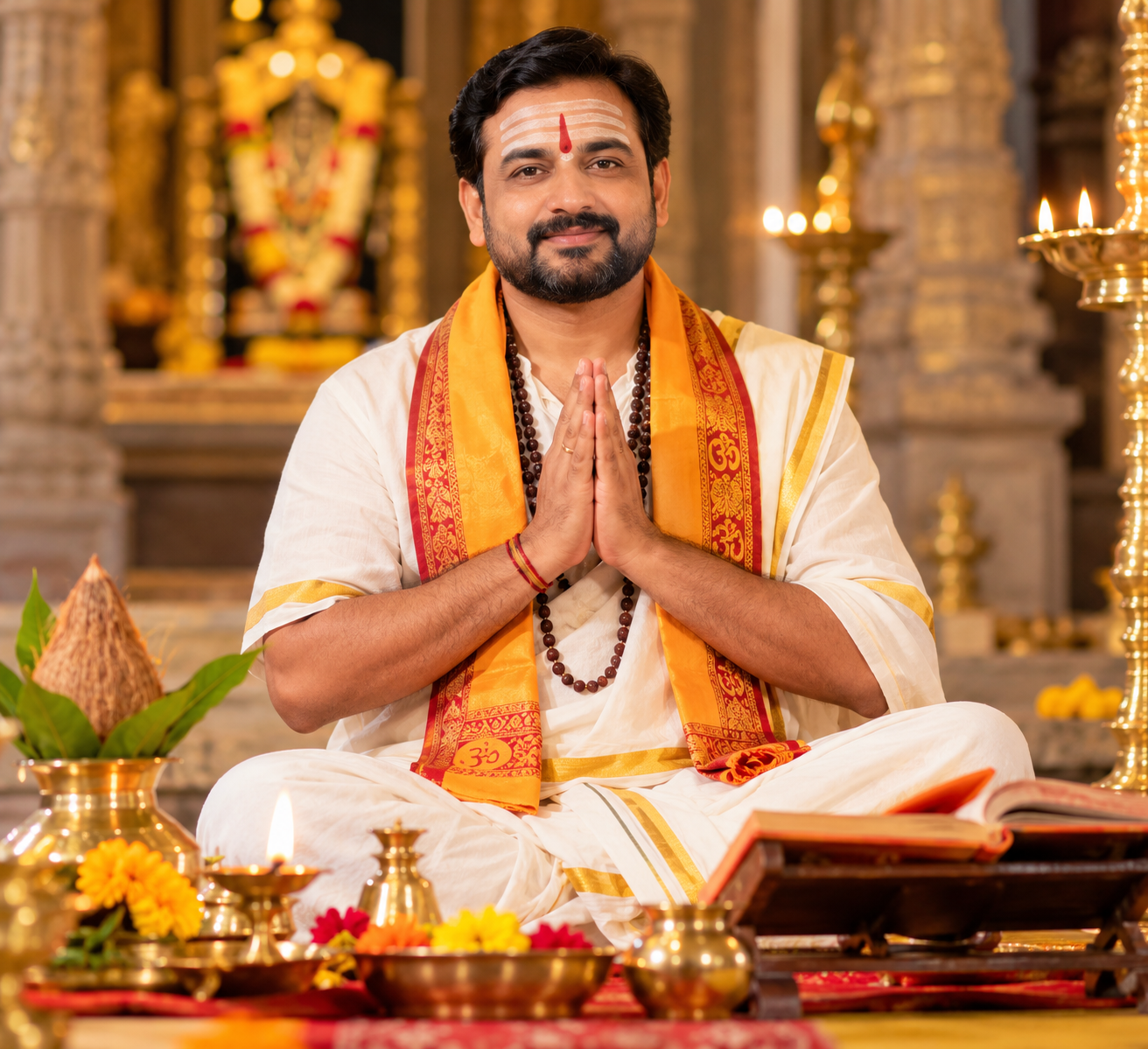
- Visit a temple, perform Surya or Vishnu pooja and give donations.
Samagri
- Sesame seeds and jaggery
- New rice and sugarcane
- Turmeric and kumkum
- Flowers
- Copper vessel for Arghya
Frequently asked questions
Is Makar Sankranti always on 14 January?
It is on 14 or 15 January depending on the year, as it follows the Sun's transit.